The International Academy of Astronautics (IAA) is offering participation in several IAA studies and projects.

Calls for Study & Project Participation
How to respond to the Calls for Participating in IAA Studies & Projects
In this section the International Academy of Astronautics announces the various opportunities to join an IAA study group or an IAA project. The announcement includes information about accessibility for non-members of the Academy including students, young professionals, etc. Clicking on the study title will allow more information about the Study Group proposal, Study Group leaders and initial membership. Interested candidates in any of the above studies must send by email to IAA office the study identification number along with their name, address, current work activity and short biography.
SG 1.17 – Next-generation space observatory searching for close-by habitable worlds and extraterrestrial life
 Any person interested may apply to join the group open to non members of the Academy, subject to appropriate qualification. The persons interested in participating may contact by email the IAA office or call at 33 1 47 23 82 15. The work of the international team is on volunteer basis with primarily use of internet, no travel required.
This proposal presents a comprehensive plan to construct the next-generation space observatory, building upon the research and advancements in deep space exploration to systematically embark on the detection of potential biosignatures on habitable exoplanets in nearby stellar systems. This endeavor encompasses the study of exoplanet diversity, terrestrial planets filtering, construction of precise atmospheric models for exoplanets, evaluation of habitability indicators for terrestrial exoplanets, and in search of signs of biological activities based on planetary spectral and atmospheric composition characteristics.
SG 3.35 – Artificial Intelligence Technologies for Space
 Any person interested may apply to join the group open to non members of the Academy, subject to appropriate qualification. University students (Biology, medicine, Engineer Institute, Master, and PhD) are welcomed. The persons interested in participating may contact by email the IAA office or call at 33 1 47 23 82 15. The work of the international team is on volunteer basis with primarily use of internet, no travel required.
The objective of this study is to give an expert and complete outlook on the uses of Artificial Intelligence (AI) applied to space missions, and to compile a comprehensive space technical report on the mission requirements, progress, deficiencies, trends, and the key technologies of AI for space.
SG 4.27 – Low cost highly autonomous (AI) small satellite constellation for deep space exploration
 Any person interested may apply to join the group open to non members of the Academy, subject to appropriate qualification. The persons interested in participating may contact by email the IAA office or call at 33 1 47 23 82 15. The work of the international team is on volunteer basis with primarily use of internet, no travel required.
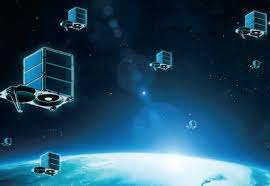
To make practical mission strategy regarding satellite constellations around Mars, asteroids, comets, other small bodies such as Ceres and more.
There are unique challenges for such missions with multiple satellites in low-gravity environments that are different than on Earth, such as Navigation, formation flying, artificial intelligence, autonomous operations, and more. There is also challenging to perform these missions with low cost less than a few million dollars. Such a constellation would perform autonomous formation flight, collaborative imaging and coordination, on-board processing of large amounts of data using AI (Artificial Intelligence), and high-level commanding from Earth.
To achieve this goal, some of feasible case study what kind of satellite constellations/formation flight (satellite numbers/size/function/orbit profile/AI implementation) is more applicable for asteroids or other small body mission and we will take an example from the latest planned missions as reference. The most expected asteroid missions currently planned are Lucy and Psyche Asteroid Missions from NASA (early 2020s and 2030). So this study group covers both feasible case study and example of actual applicable missions.
SG 5.19 – Opportunities for National Governments to Foster Space Traffic Management using the Space Sustainability Rating
 Any person interested may apply to join the group open to non members of the Academy, subject to appropriate qualification. The persons interested in participating may contact by email the IAA office or call at 33 1 47 23 82 15. The work of the international team is on volunteer basis with primarily use of internet, no travel required.
The proposed study asks how national governments can use the Space Sustainability Rating as part of their domestic regulation and authorization of space launches and operations. What would be the implications if national governments required a certain level of performance based on the Space Sustainability Rating for operators applying for approval to launch? Is it more effective for governments to require minimally sustainable actions or to incentivize spacecraft operators to identify innovative ways to be as sustainable as possible? This study will draw insights from engineering, policy and economics to address these and related questions. The results will recommend to national governments how they can make use of the Space Sustainability Rating as a tool to increase the sustainable behavior of space actors.
SG 6.16 – STEM / STEAM for Space: Grand Challenges
 Any person interested may apply to join the group open to non members of the Academy, subject to appropriate qualification. University students (Law, space law, economics, Engineer Institute, Master, and PhD) are welcomed. The persons interested in participating may contact by email the IAA office or call at 33 1 47 23 82 15. The work of the international team is on volunteer basis with primarily use of internet, no travel required.
The main goal of the IAA Multi-Commission Study Group “STEM/STEAM for Space: Grand Challenges” is to determine what needs to be done to enhance the impact of space science and technology on Science, Technology, Engineering, Art and Mathematics (STEAM) education for the improvement all of society and, eventually, for the spread of mankind into the cosmos. This will involve the investigation of the long-term impact of STEM/STEAM education on Space Science and Technology for the future of Space Exploration. It will be carried out by the elite body of the IAA and its ambassadors from each IAA commission, with the cooperation of the most prestigious national academies around the globe through joint workshops, video-conferences, meetings. Annual reports will be used to make valuable recommendations for a road-map of action for all participants.
SG 6.22 - Scope of the Space Architecture discipline revisited in response to current demands
Any person interested may apply to join the group open to non members of the Academy, subject to appropriate qualification. The persons interested in participating may contact by email the IAA office or call at 33 1 47 23 82 15. The work of the international team is on volunteer basis with primarily use of internet, no travel required.
Identify and categorize the Scope of the Space Architecture discipline that responds to current space sector demands.
Identify and categorize international multi-disciplinary expert resources—both industry and government, and academic institutions—to support the advancement of space development.
Generate peer-reviewed archival information that serves as a useful reference for practitioners, students, and decision-makers and can be used as a source for developing a web site database.
Develop new strategies and methods that broaden current trends in design, and develop new integration approaches.
