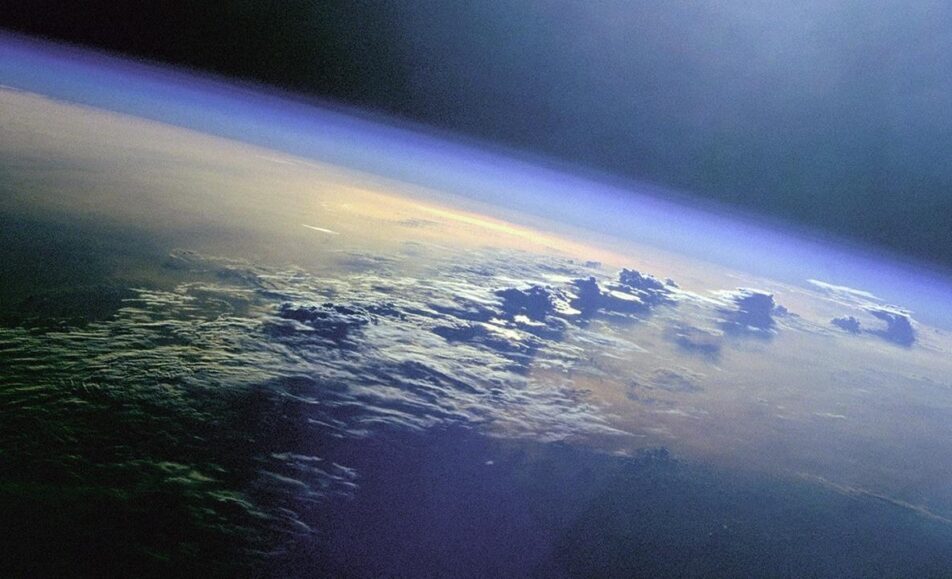
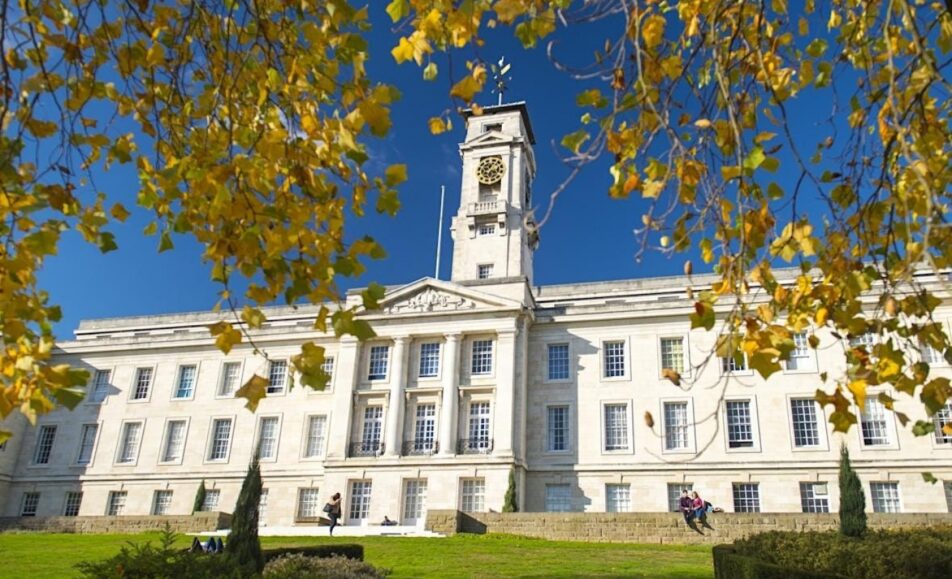
This year, IPSPACE 2026, with the theme of Peace for the Future, the Future Through Peace, will be held from November 16-19 in Hainan province, shortly after the Zhuhai Airshow, with the motto “One Space, One Home” and focusing on “Scientific Research, Technological Innovation, and Science Engagement,” IPSPACE will gather scientists, entrepreneurs, educators, scholars, and professionals. On 17 November 2026 the opening Ceremony will be followed by a plenary session and 8 specialized sessions and forums.
Looking ahead to 2026, IPSPACE continues its mission with renewed energy and broader ambition. IPSPACE 2026 will advance global aerospace innovation, academic exchange, professional education, technology commercialization, data applications, science communication, industrial development, and multi-stakeholder collaboration. It aims to establish itself as a pivotal international platform for showcasing cutting-edge aerospace achievements and exchanging insights on industry trends. By bridging financial institutions with space technology through financial investments, healthcare initiatives, and STEM education programs, the event will promote the peaceful utilization of space technology for humanity’s collective benefit.
We invite professionals, researchers, innovators, and institutions from across disciplines to contribute their insights and participate in this landmark event.
For more detailed information, please visit https://spacetu.org.cn/home
IPSPACE 2026
We sincerely invite you to submit papers related to the following topics.
- Space-based Information for Marine Applications
- Evidence and trends of global climate change and ocean warming;
- Forecasting, early warning, and emergency response for global marine disasters;
- Global water-cycle monitoring and water-resources management;
- Global ocean monitoring and blue-finance development;
- Global marine-pollution monitoring and governance;
- Global marine-biodiversity monitoring and conservation;
- Development of the “Digital Ocean” and high-quality growth of the marine economy;
- Bay-area development, coastal-zone protection, and green and low-carbon development of major ports;
- Green and low-carbon development of the maritime transport industry;
- Maritime safety assurance and emergency search and rescue;
- Development of marine ranching and its green, low-carbon transition
- Commercial Space Investment
- Commercial launch services
- Development and production of commercial remote-sensing satellites (including OEM production), and telemetry, tracking, and command services
- Value-added space-information services and digital assetization
- Space mining and resource extraction
- Commercial operating models for space tourism
- Aerospace systems engineering planning and large-scale production management
- Green Space Propulsion
- Electric propulsion
- Clean/green fuels and high-performance rocket-engine development
- Green air-breathing hypersonic propulsion
- Novel space propulsion
- Reusable rocket propulsion
- Other green space-propulsion technologies
- Low-Altitude Economy and Space Technology
- Space communications and the low-altitude economy
- Space navigation and the low-altitude economy
- Space remote sensing and the low-altitude economy
- Other space technologies and the low-altitude economy
- Small Satellites: Innovation and Opportunities
- Technological breakthroughs in CubeSats and micro remote-sensing constellations
- Modular design and mass-manufacturing technologies for small satellites
- Research and development in in-orbit servicing and autonomous operating systems
- AI-driven onboard data-processing capabilities
- Low-Earth-orbit constellation deployment and disaster-monitoring applications
- Competition for orbital resources and debris-mitigation strategies
- Other small-satellite technologies
- Space Debris and Green Space
- Space-object trajectory tracking and collision-risk early warning
- Innovation in active debris-removal technologies
- Disposal of defunct spacecraft and orbital-cleanup technologies
- Space-weather monitoring and response strategies
- Responsibility frameworks and insurance mechanisms for space sustainability
- Space traffic management
- Special Track: Trends in Space
- The origin of the universe, extreme celestial objects, dark matter, and the search for extraterrestrial intelligence
- Gravitational-wave detection and analysis of the fine structure of black holes
- Solar activity, the solar wind, and space-weather research
- Lunar exploration and protection
- Lunar and Martian habitability and the search for extraterrestrial civilizations
- Space-based power generation and terrestrial energy
- Materials and structural-engineering challenges for space elevators
- Deep-space tracking, telemetry and command, navigation, and communications support technologies
- In-orbit manufacturing and development of space construction materials
- The evolving relationship between space and modern society
- Planetary defense
- Other trends in space-technology development
- Space Exploration and Applications
- Space-environment exploration and applications
- Atmospheric exploration and applications
- Ocean exploration and applications
- Land exploration and applications
- Joint multi-sphere Earth-system exploration and applications
- Space Launch and Transportation
- Reusable space launch
- Reusable aerospace transportation systems
- Space transportation
- Space Technology and Human Health
- Space-radiation protection and development of radiation-resistant materials
- Innovative remote-sensing technologies for global health monitoring
- Space bioengineering and medical-diagnostic applications
- Astronaut health protection and long-duration survival strategies
- Adaptability of terrestrial life to extreme space environments
- Applications of Traditional Chinese Medicine to human health
- Mental health in space
KEY DATES
March 20, 2026: Call for Papers
September 30, 2026: Abstract submission deadline
October 15, 2026: Final abstracts selected and invitations extended
October 25, 2026: Full-length manuscripts
ABSTRACT SUBMITTAL
Technical paper abstracts (250 to 500 words in length) in the areas described above will be accepted electronically through the conference website. Please be sure to designate the topic area your paper addresses (see topics listed above). The deadline for receipt of abstracts is September 30, 2026.
PAPERS
Full-length manuscripts are due by close of business on October 25, 2026. Revisions and corrections will be accepted within two weeks after the end of the conference. The format for papers is specified on the conference website. Accepted papers will be published in the official conference proceedings. Excellent full-length manuscripts will be selected for inclusion in the IPSPACE 2026 Paper Collection, jointly published by Zhejiang University Press and Springer Nature, and indexed by the Engineering Index (EI) database; these manuscripts will also be considered for publication in a special edition of Acta Astronautica (the journal of the International Academy of Astronautics).
Submission Guidelines
- Submissions must present original, unpublished research aligned with conference themes. Manuscripts should demonstrate originality and have clear themes. Review articles require substantive critical analysis with original insights.
- Papers should avoid politically sensitive content or disputed territorial claims (including controversial cartographic representations of national borders).
- All submissions will undergo rigorous academic misconduct screening, including AI-generated content (AIGC) detection and similarity checks. The maximum allowable similarity index is 20%. Accepted papers will be published post-clearance.
- SUBMISSION and REGISTRATION: For abstract/paper submission and registration, please visit https://spacetu.org.cn/homeCONTACT:Jill Lin: JillLynn23@outlook.com
Manuscripts must be free from confidentiality restrictions.Background
The International Symposium on the Peaceful Use of Space Technology – Health (IPSPACE), launched in 2018, has successfully convened for eight consecutive years under the support of the UN and relevant Chinese local administrations. Over the past eight years, IPSPACE has been hosted in various cities in China including Beijing; Zhuhai, Guangdong Province; Wenchang, San’ya, Haikou, and Boao, Hainan Province. IPSPACE is the only annual international event that had co-chairs simultaneously from eight of the most influential organizations in the global space community. These include the International Academy of Astronautics (IAA), the International Astronautical Federation (IAF), Committee on Space Research (COSPAR), Space Foundation, the Association of Space Explorers (ASE), the International Space University (ISU), Rice University’s Baker Institute’s International Space Medicine Summit (ISMS), and the George H. W. Bush Foundation for U.S.-China Relations. As a platform dedicated to fostering international exchange and collaboration in the space technology sector for peaceful applications, the symposium’s impact has been growing every year. It has become one of the most influential events, among IAC and Space Symposium, that gathers renowned scientists, astronauts, entrepreneurs, financiers, educators, and scholars from multiple countries and regions in the world.
IPSPACE 2026 will be jointly hosted by the International Academy of Astronautics (IAA) and the International Peace Alliance (Space), an observer organization at the UN COPUOS, and China Electronics Chamber of Commerce (CECC), China Association for Remote Sensing Applications (CARSA), the GNSS & LBS Association of China (GLAC), and China Communications Industry Association (CCIA), with strong support from strategic partners such as the Aircraft Owners and Pilots Association of China (AOPA-China), ZGC Commercial Aerospace Industry Innovation Alliance. It is organized by the State-Guest Entrepreneur Club (SGEC).
Each year, the IPSPACE conference brings together hundreds distinguished participants from China, the United States, Europe, Japan, and other countries and regions, representing a wide spectrum of expertise across space medicine, remote sensing, satellite communication, life science, artificial intelligence, and beyond. The event serves as a unique platform for showcasing pioneering research, technological innovations, and collaborative solutions aimed at addressing mutual challenges for humanity through space-based technologies. IPSPACE provides an international platform for “academic exchange, knowledge sharing, and technology incubation,” promoting the peaceful applications of space technologies and facilitating their implementation in sectors such as health, education, and sustainable development.
In addition to its scientific and academic impact, the symposium has also garnered significant media attention. IPSPACE has been featured in special reports and live broadcasts on China Central Television (CCTV) for five consecutive years. The media coverage has reached millions of viewers, further amplifying the visibility and influence of the event across both professional and public audiences.
IPSPACE official website: https://spacetu.org.cn/home
Presidium
See list in the online document below.
https://docs.google.com/document/d/14dbvj40yY_54KxIcmPgGfM28xWTEgKh5ZmLlvmiKMOk/edit?usp=sharing